Watercolor, Ink, and Collage: Building Transparent Layers

A process-focused guide to how watercolor, ink, and collage are layered in Can Maden’s mixed media works, with material choices, drying rhythms, and compositional strategies.

mixed mediawatercolorinkcollageprocesslayering
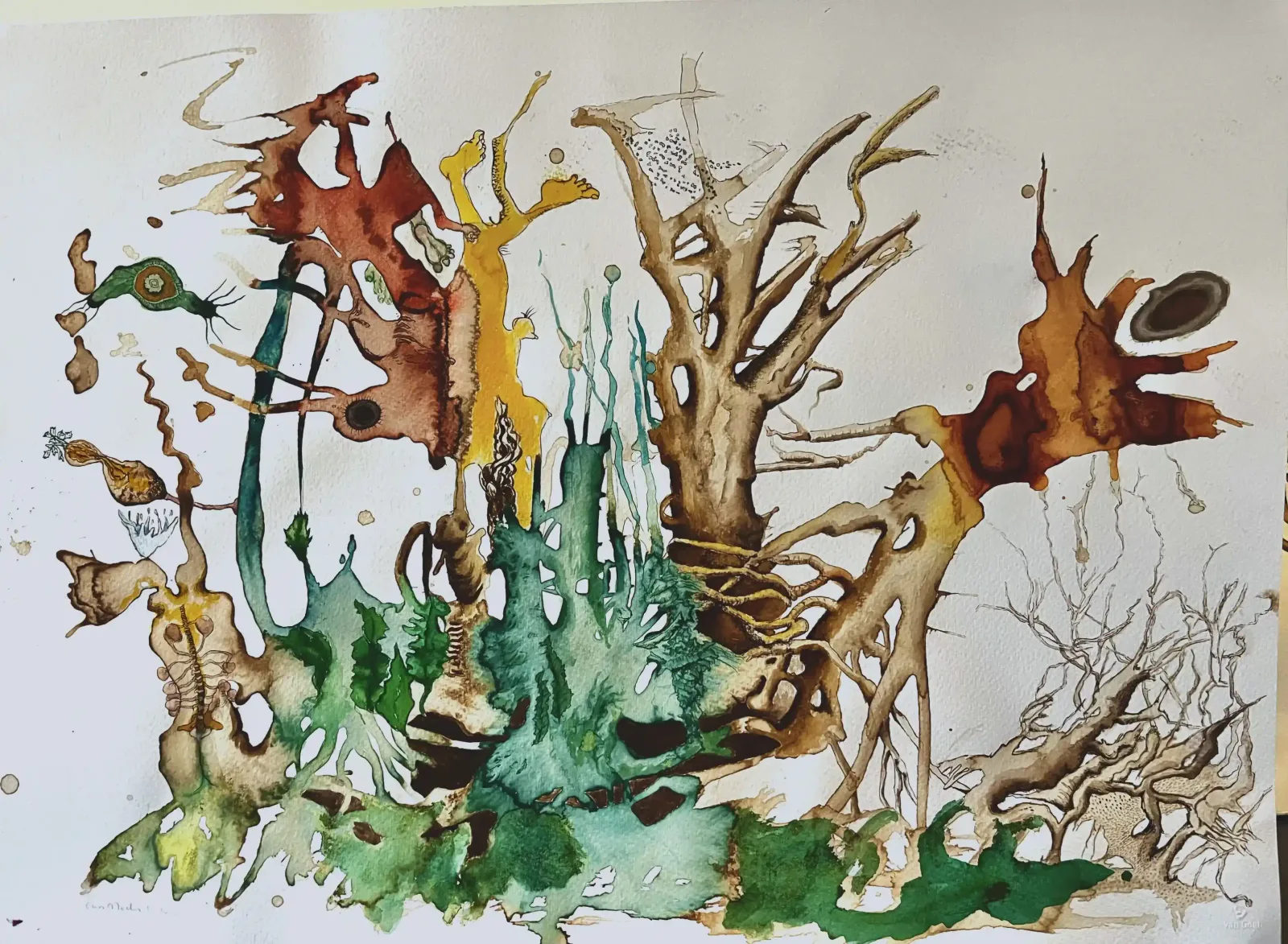
Artwork by Can Maden illustrating the materials and techniques discussed

Material palette and surface preparation

Paper that can hold repeated wet and dry passages provides a foundation for the process. Watercolor provides transparent tonal fields, while ink locks in gestures and structural edges. Collage elements are introduced after the first washes to preserve translucency and prevent muddy color mixing.

Layer order and drying rhythm

Drying intervals are treated as compositional moments: washes set the atmosphere, ink introduces clarity, and collage interrupts the surface with tactile contrast. This alternating rhythm keeps the surface legible while allowing depth and soft transitions.

Compositional balance

Large open areas of watercolor balance dense collage clusters. Ink lines guide the eye across the paper, preventing fragmentation and reinforcing a sense of movement found in the surrounding natural textures and urban rhythms of Istanbul.

Frequently asked questions

Why combine watercolor with ink and collage?

Watercolor provides luminous atmospheres, ink introduces structure, and collage adds tactile specificity. Together they create a layered narrative that can move between abstraction and figurative hints without losing clarity.

Does collage compromise archival quality?

Durability depends on the paper, adhesive, and added materials. Ask the studio for the material list and care recommendations for a specific work.

How is depth created on a single sheet of paper?

Depth comes from overlapping transparent washes, selective ink contours, and collage fragments that cast subtle shadows and create spatial tension across the surface.