Symbolism and material memory
Coffee grounds reference domestic rituals and the cultural history of Turkish coffee. Applied as granular pigment, they introduce memory into the surface and create a tactile contrast to the fluidity of watercolor.
How coffee grounds and plant extracts become tactile, atmospheric layers in Can Maden’s mixed media works, with insight into technique, symbolism, and preservation.
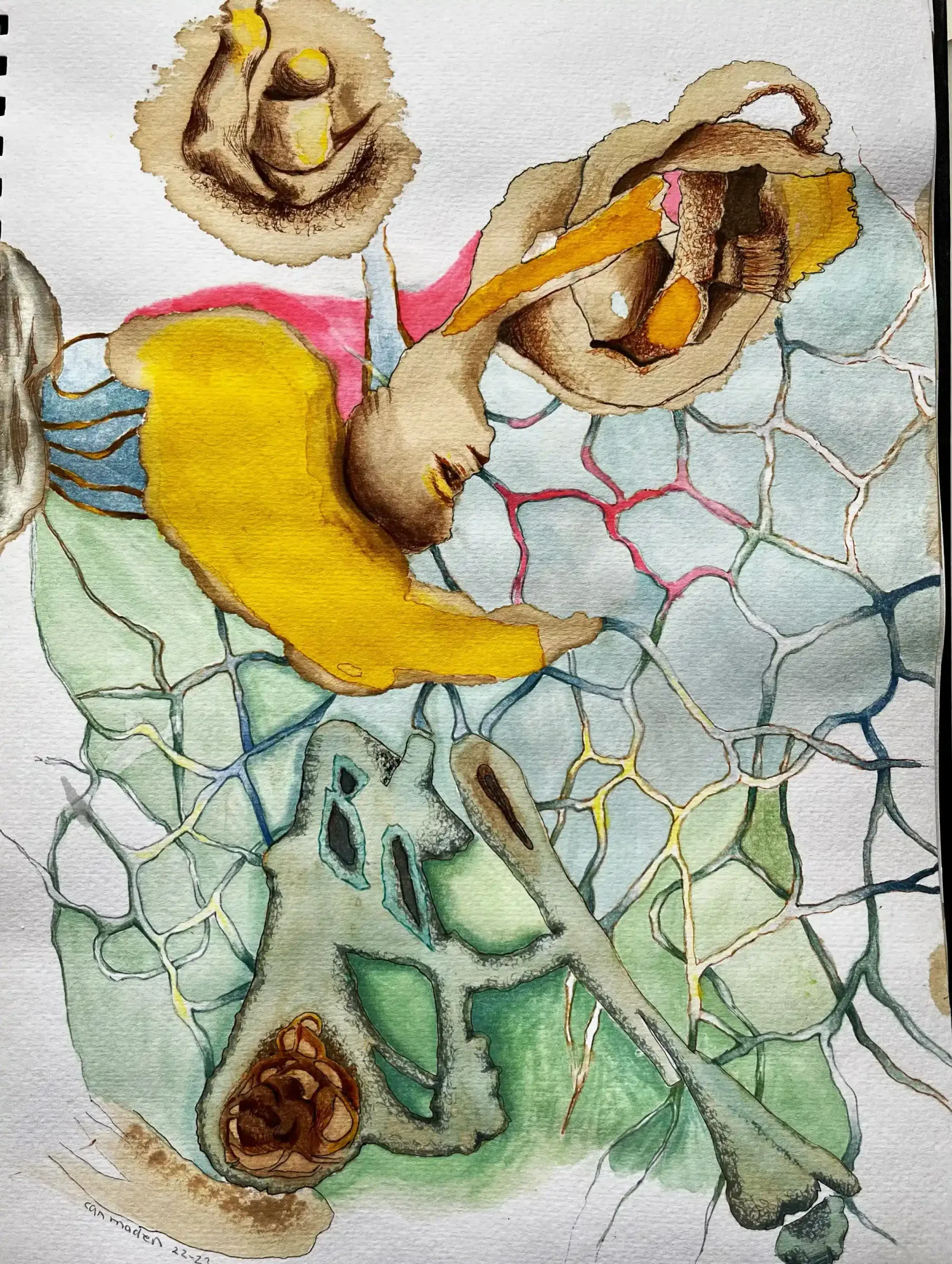
Coffee grounds reference domestic rituals and the cultural history of Turkish coffee. Applied as granular pigment, they introduce memory into the surface and create a tactile contrast to the fluidity of watercolor.
The behavior of organic materials depends on the binder, drying process, and storage conditions. A gently raised surface catches light from different angles. Ask the studio about care for an individual work.
The granular texture softens edges, diffuses light, and creates an earthy color range. This helps anchor abstract forms and gives each piece a sense of physical presence.
Care depends on the binder, surface, and construction of the work. Ask the studio for material information and framing and care recommendations.
The material carries cultural memory and connects the work to lived rituals, giving the composition a grounded, human scale.